 Caius
Julius Caesar:
CAESAR DICT PERPETUO (murdered 44 BC), denarius
Caius
Julius Caesar:
CAESAR DICT PERPETUO (murdered 44 BC), denarius
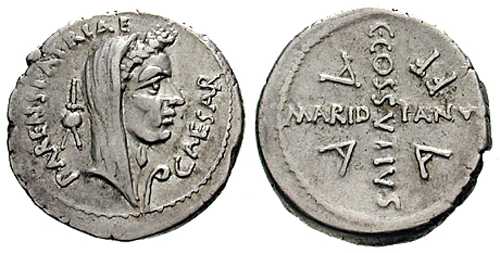
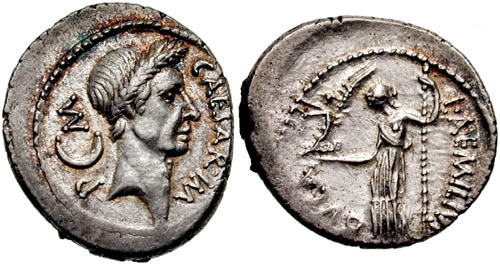 Julius
Caesar, Pontifex
Maximus
Julius
Caesar, Pontifex
Maximus
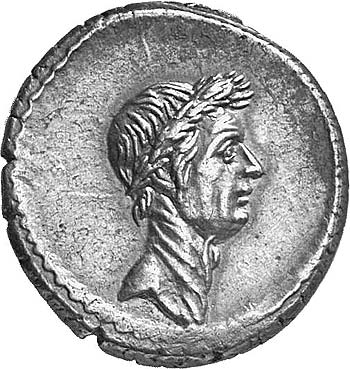
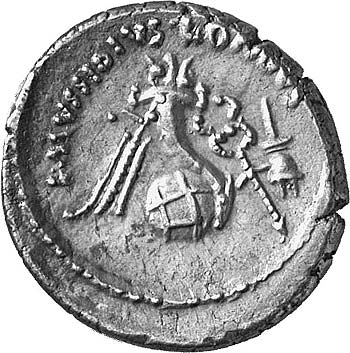
Caius Julius Caesar, postumous portrait 42 BC. He was murdered in March 44 BC, denarius
 The 12 Caesars of Suetonius
The Julio-Claudian Dynasty
Caius
Julius Caesar:
CAESAR DICT PERPETUO (murdered 44 BC), denarius
Julius
Caesar, Pontifex
Maximus
Caius Julius Caesar, postumous portrait 42 BC. He was murdered in March
44 BC, denarius
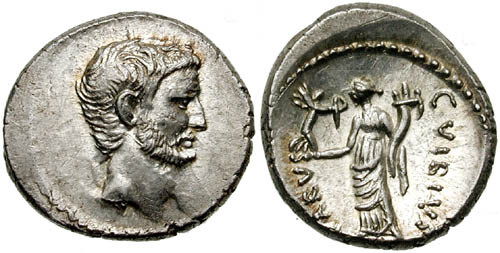
an
early Portrait denarius
of Marcus Antonius in 42 BC
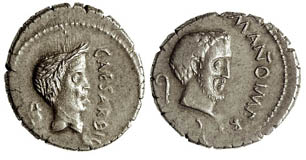 Caesar
& Marcus Antonius
in 43 BC
Caesar
& Marcus Antonius
in 43 BC
Marcus
Antonius & Octavianus
42/41 BC


Augustus
(Octavianus) (27
BC-14 AD)
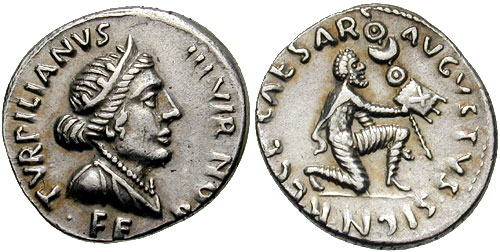
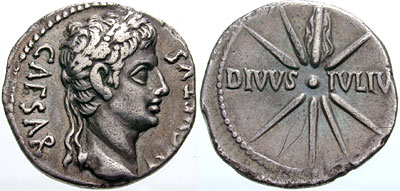
Parthian returning the legionary standards lost by Crassus to
Rome
Divus Julius, the comet (denarius struck under Augustus)
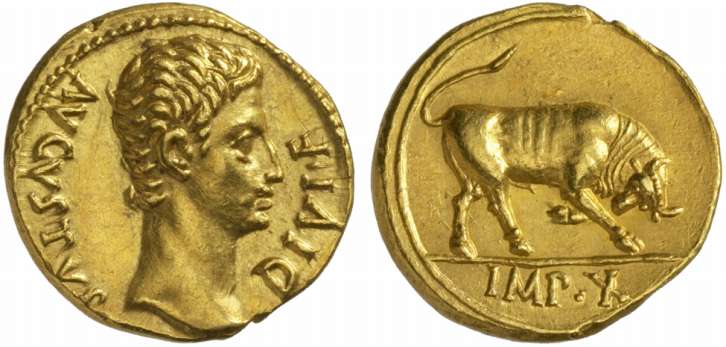
Augustus (Octavianus), this aureus symbolizing the force of the Roman
legions, the charging bull (IMP X)
Aureus to the conquest of Raetia in 16/5 BC by Drusus and
Tiberius
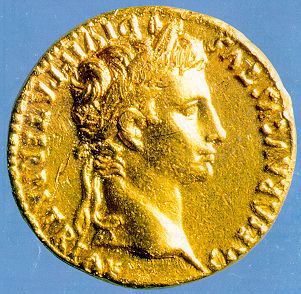
Moneyer Denarius of Augustus
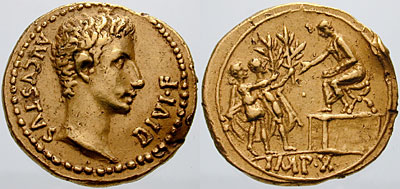
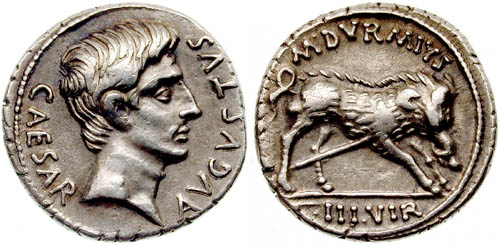
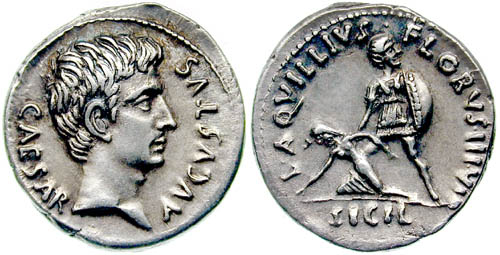
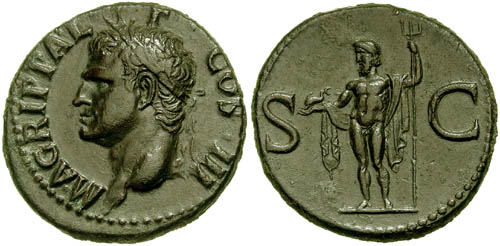
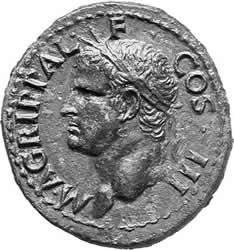
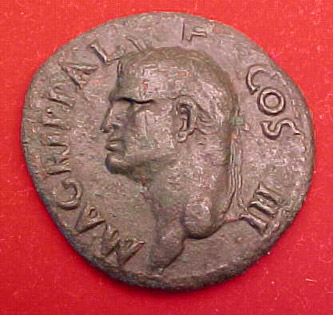
M.
Agrippa, general, friend,
son in law of Augustus, died 12 BC
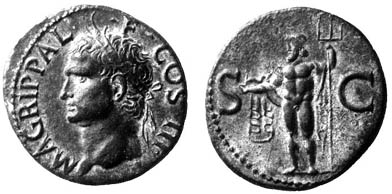
P
Quinctilius Varus
(interested in Roman
Officials ?)
as Governor of Syria
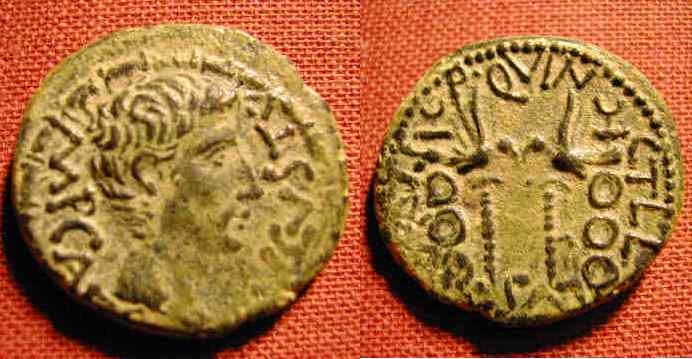
...as Governor of Africa (coin with his portrait on the left)
and As
with countermark commonly attributed to his governorship in Germania
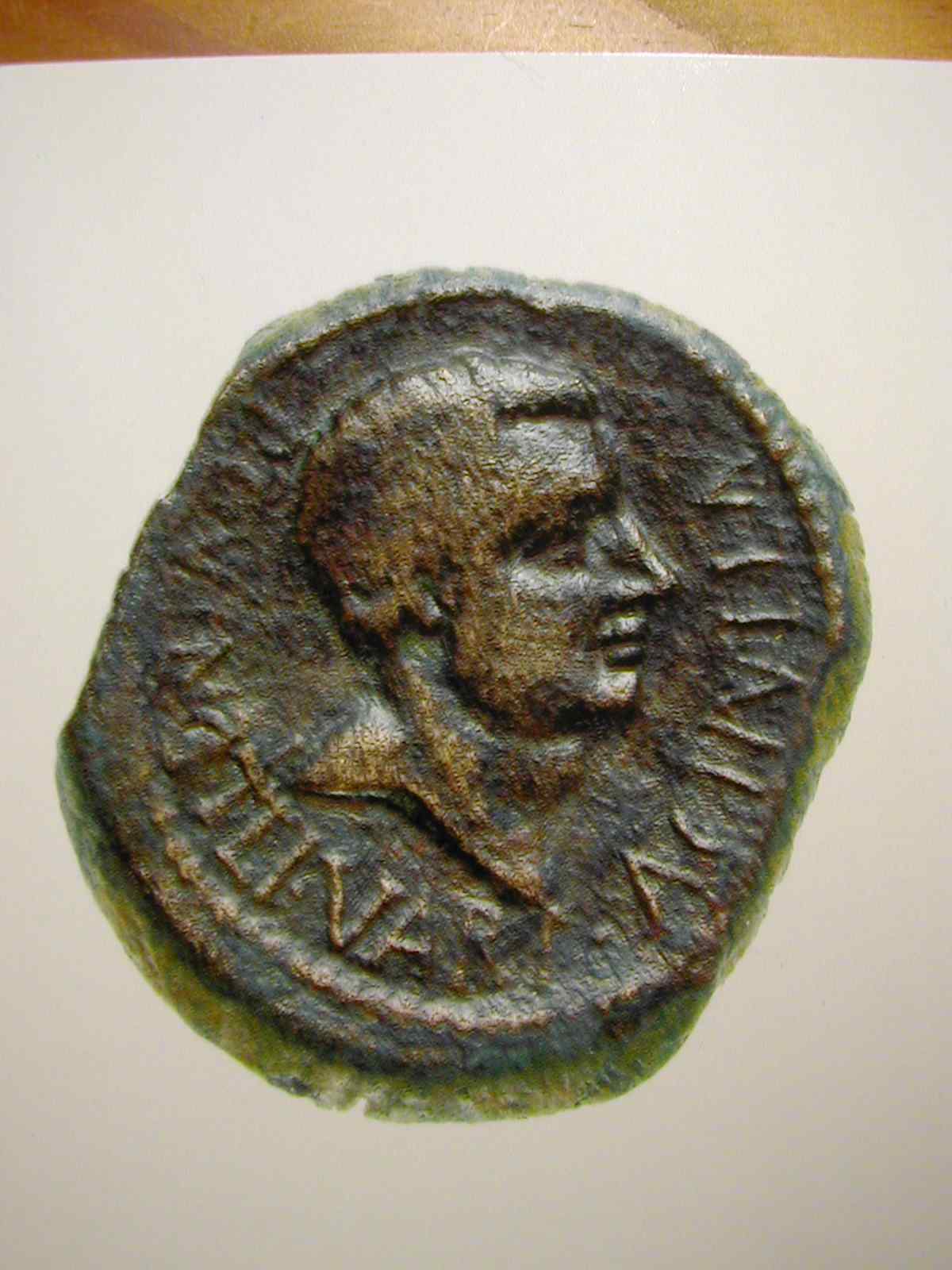
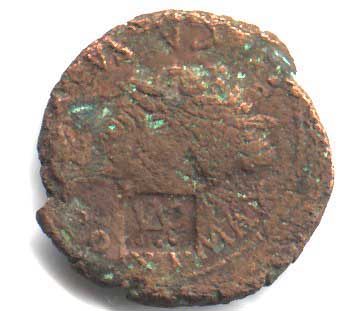
During this period many countermarks occur on AEs. The above "VAR"
countermark has been proposed to be from P Q Varus, general of Augustus
in Germania Inferior,who lost 9 A.D. in the battle of Teutoburg the
three
Legions XVII, XVIII, XIX. However this attribution is no longer likely.
For more details see the Countermark
Section
and the Varus Debate.
Caius
Caesar, grandson of
Augustus
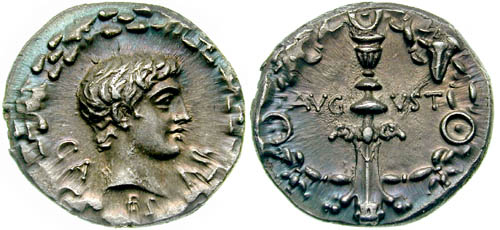
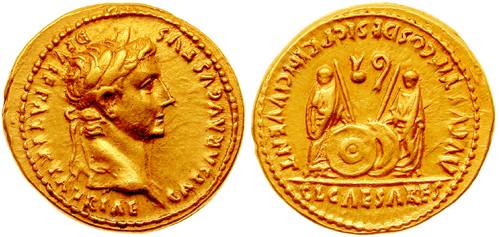
Caius
and Lucius, their grandfather
Augustus
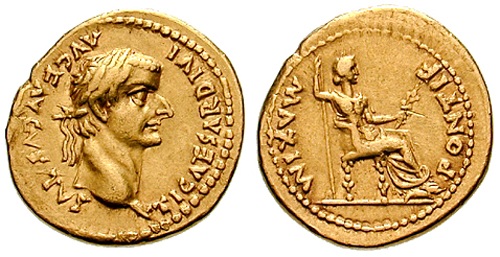
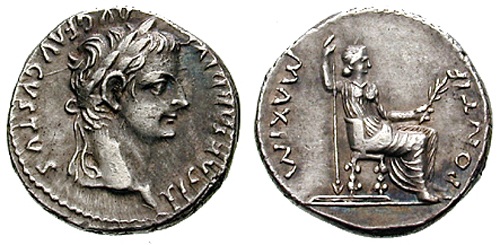
Tiberius
(14 - 37 AD)
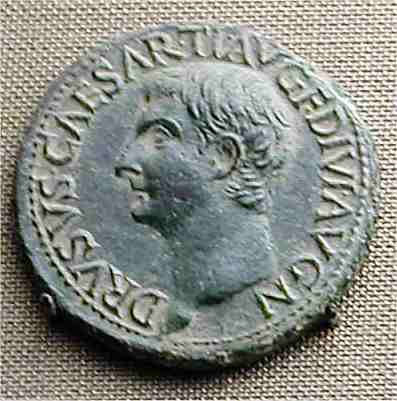
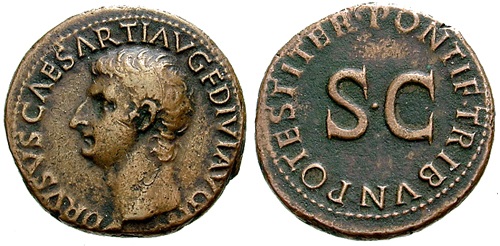
Drusus
Junior, Son of Tiberius,
died 23 AD
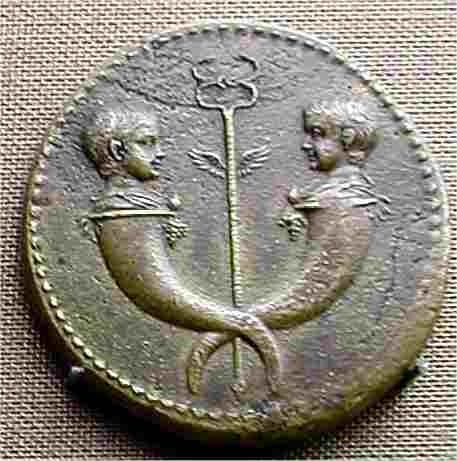
The
two sons of Drusus Junior
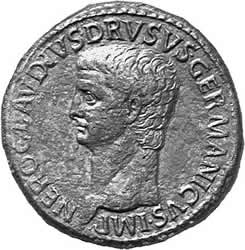
Nero
Claudius Drusus, brother
of Tiberius, and father of Claudius and Germanicus
Agrippina
I, daughter of
Agrippa and wife of Germanicus
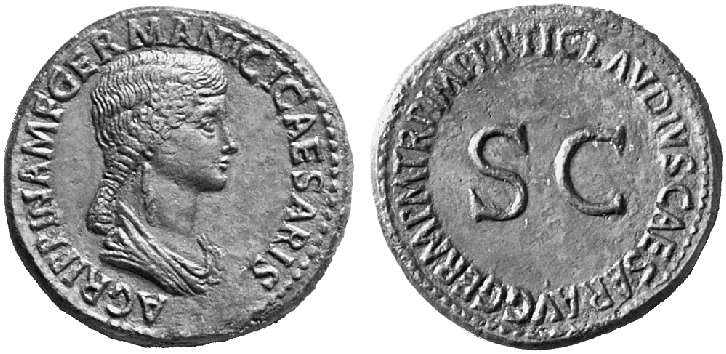
Germanicus
(died 19 AD)
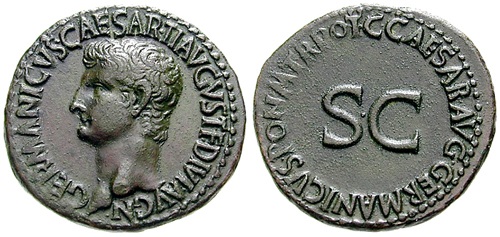
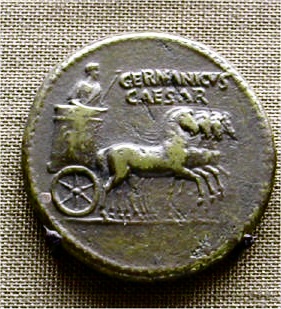
Caligula
(37-41 AD)
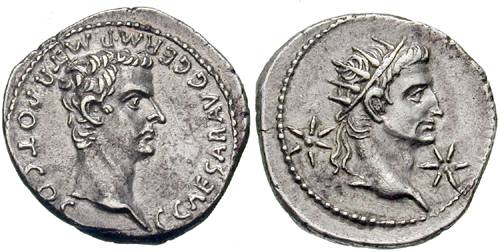 denarius
for his grandfather, Divus Augustus
denarius
for his grandfather, Divus Augustus
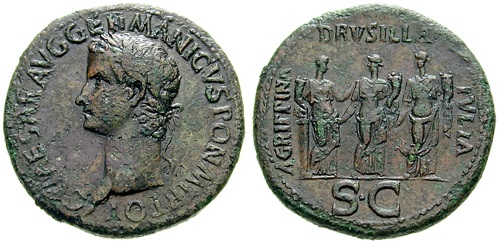 Caligula
and his 3 sisters (37-41 AD)
Caligula
and his 3 sisters (37-41 AD)
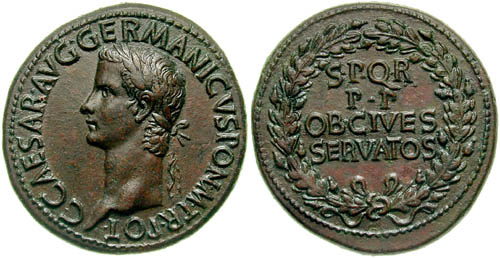
Claudius
& Agrippina
II, his niece and later wife
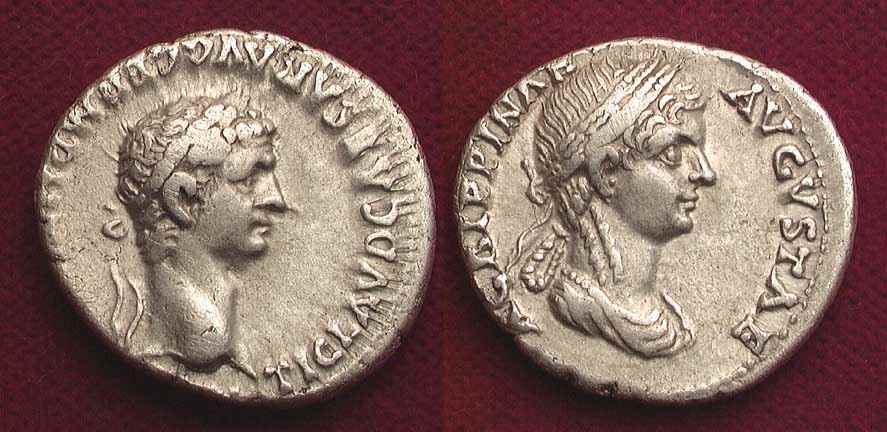
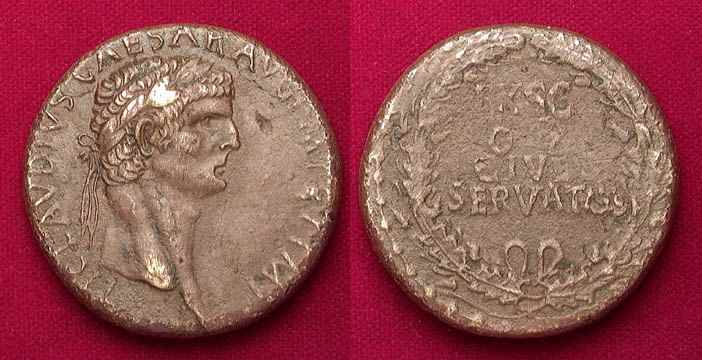
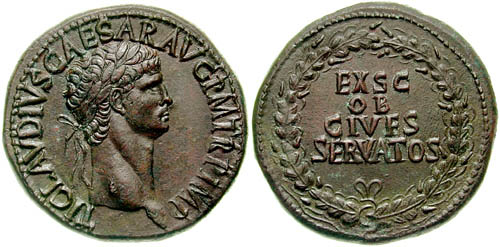
Claudius
(41 - 54 AD)
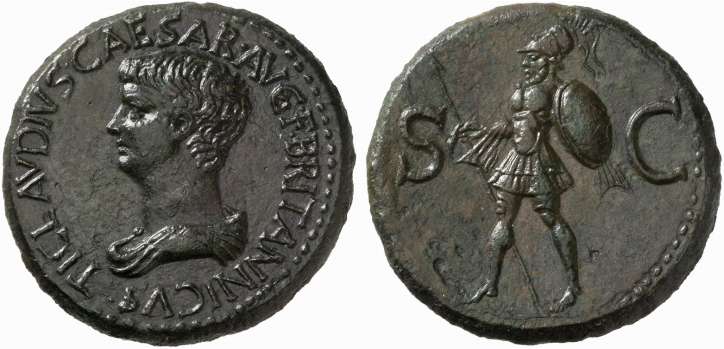
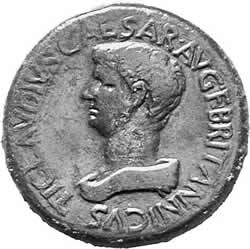
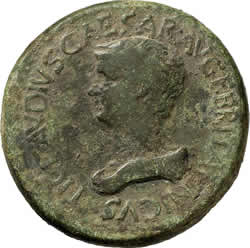
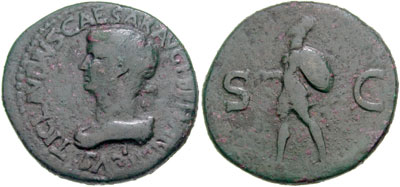
Britannicus,
Son of Claudius.
This rare sestertius was likely struck in a local mint in Thrakia
Nero
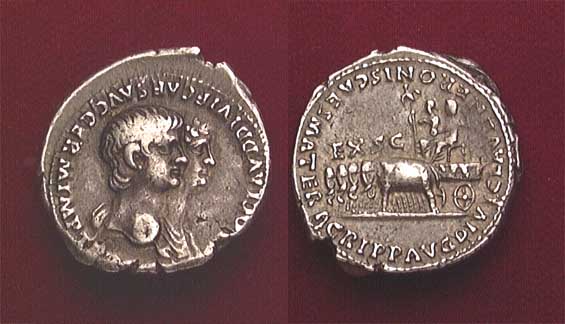
and his mother Agrippina
II
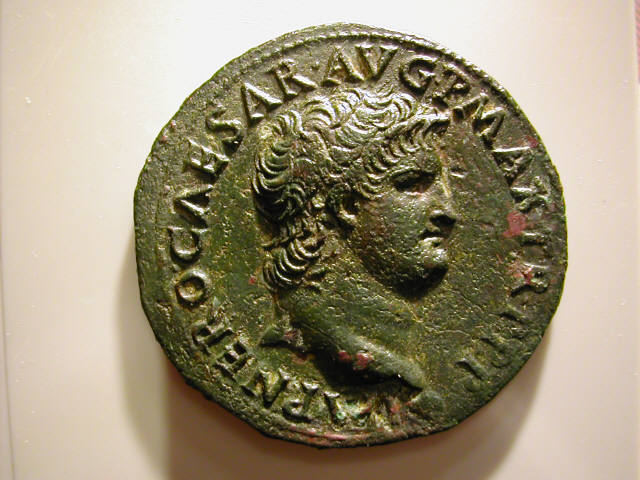
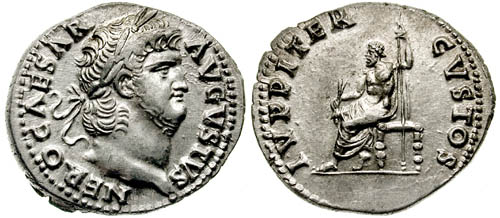
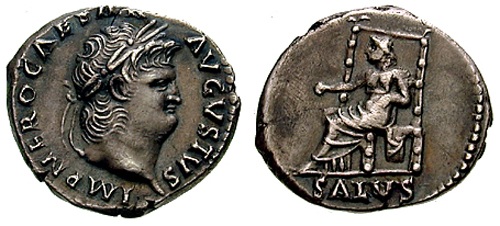
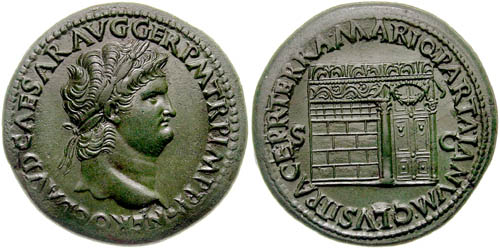
Nero
54-68 AD

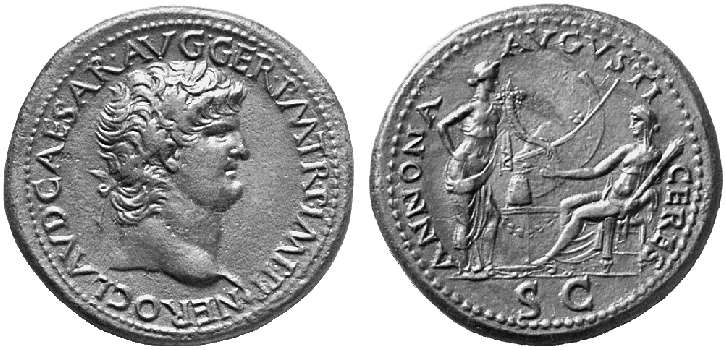
68-69 AD The Year that saw 4 Emperors: Galba (Candidate of the Spanish Legions, Otho (Praetorian Units), Vitellius (Germanic Legions), Vespasianus (Eastern and Danubian Legions)
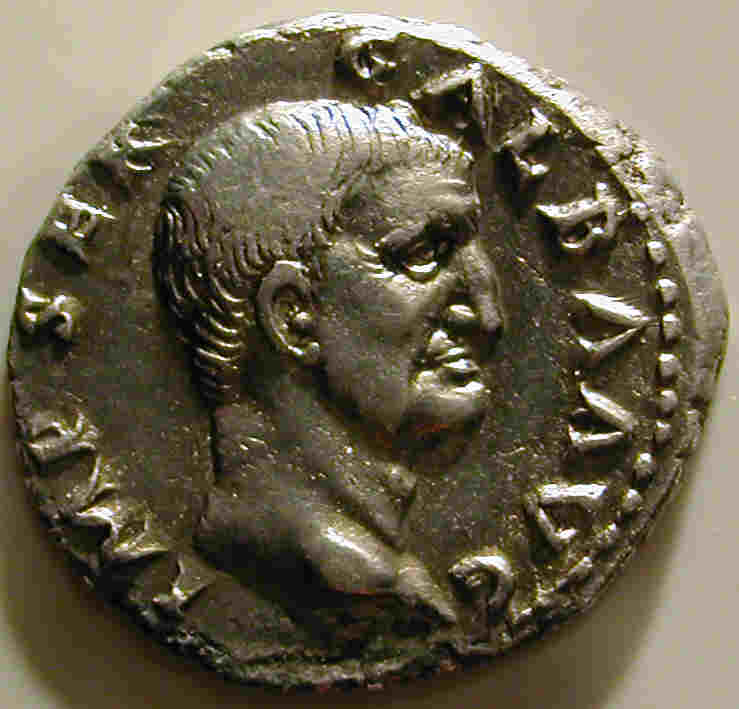
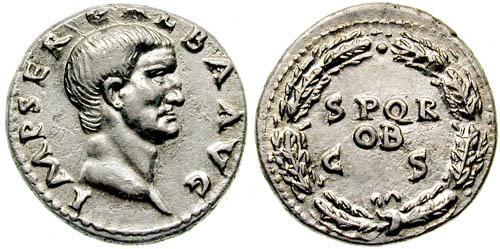
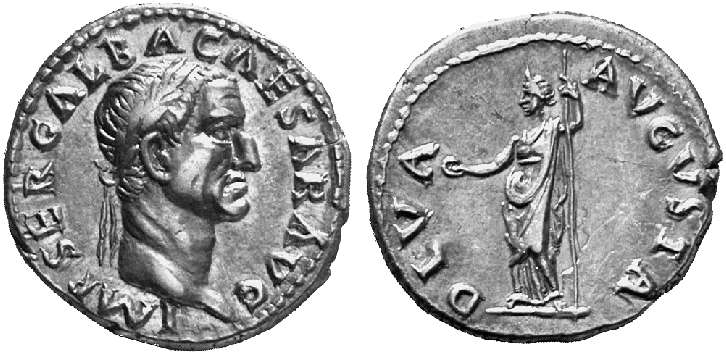
Galba
(68-69 AD)
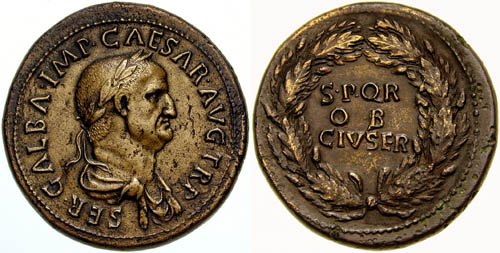
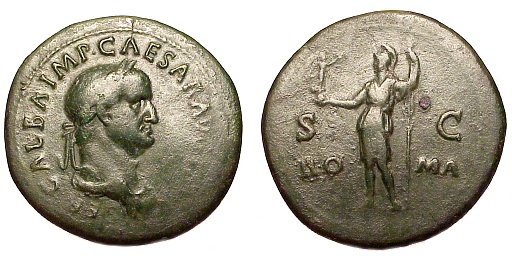
Otho
(69 AD)
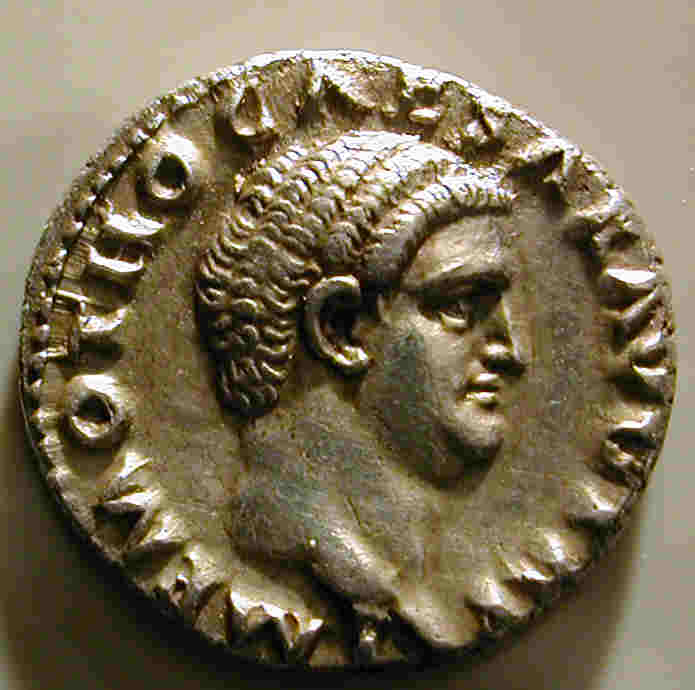
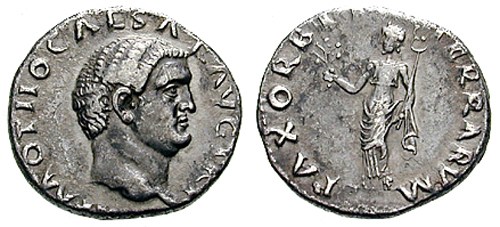
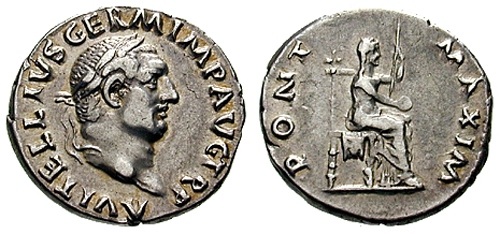
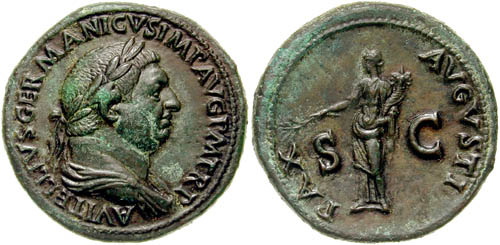
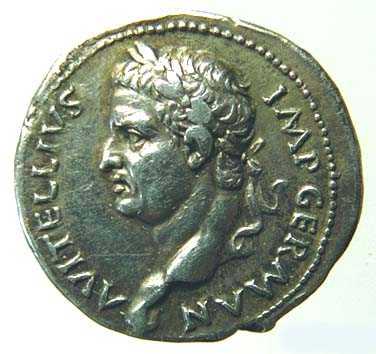
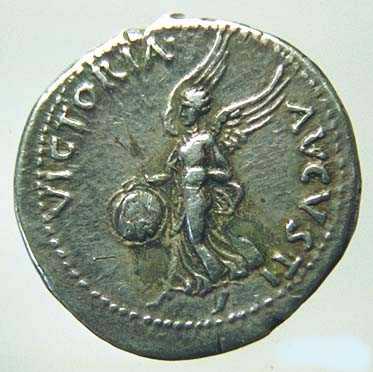
Vitellius
(69 AD)
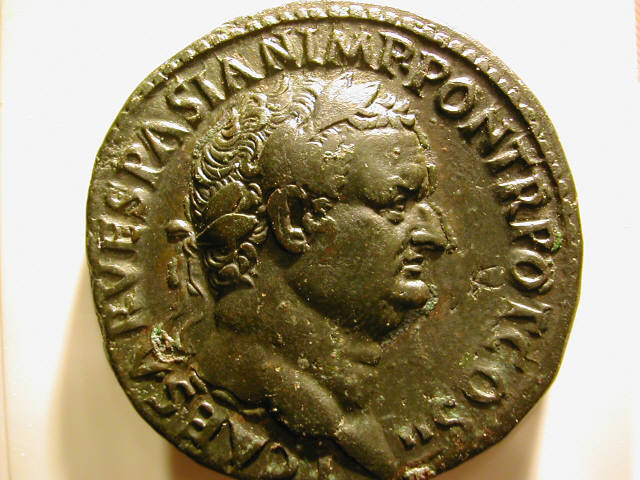
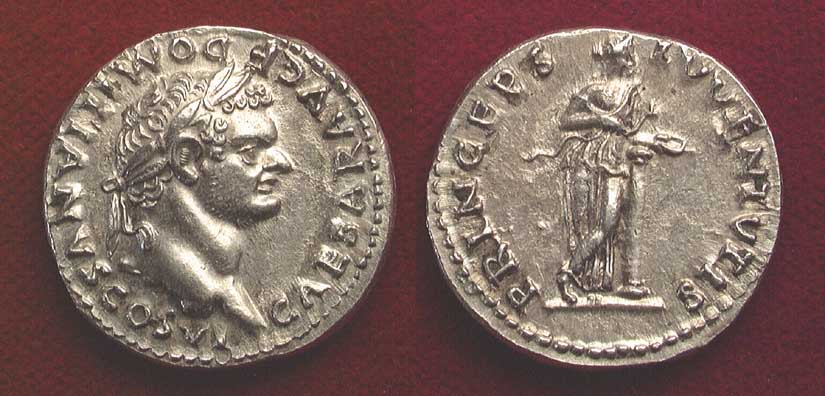
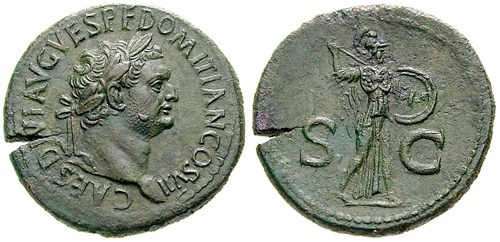
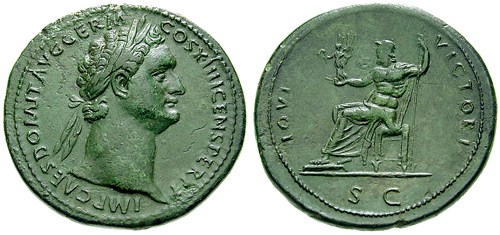
The Dynasty of Vespasianus
Vespasianus
(69-79 AD)

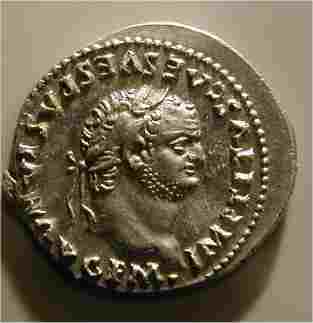
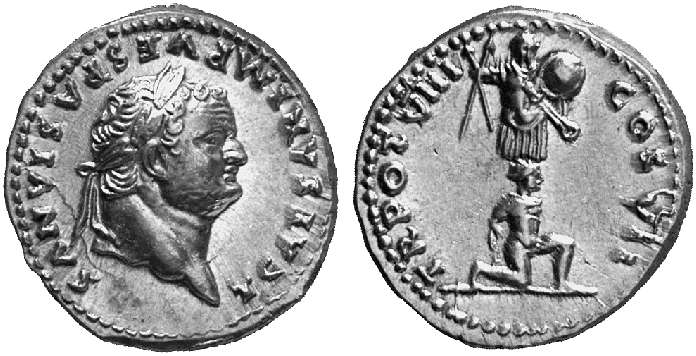
Titus
(79-81 AD)
Domitianus
(81-96 AD)
To the Adoptive Emperors, the
Golden Age